Greater Idaho Falls Transit (GIFT)
The Opportunity
When the traditional bus service in Idaho Falls became so underutilized that the Public Transit Authority stopped running buses, the City of Idaho Falls hired a Kade Marquez as their first transit director to deploy a new type of public transit: micro transit. His experience growing up in Eastern Idaho gave him a valuable perspective on the needs of his community.

“Growing up in a rural town, you know a handful of people who shouldn’t be behind the wheel anymore but don't have any other option because of where they live. Same goes for residents in Idaho Falls.”
The Solution
Greater Idaho Falls Transit or “GIFT” introduced micro transit in place of the failing public bus system. The results? A thriving ride share program that supports those in their community most in need of rides, without dependence on favors from friends and family to get where they needed to go.
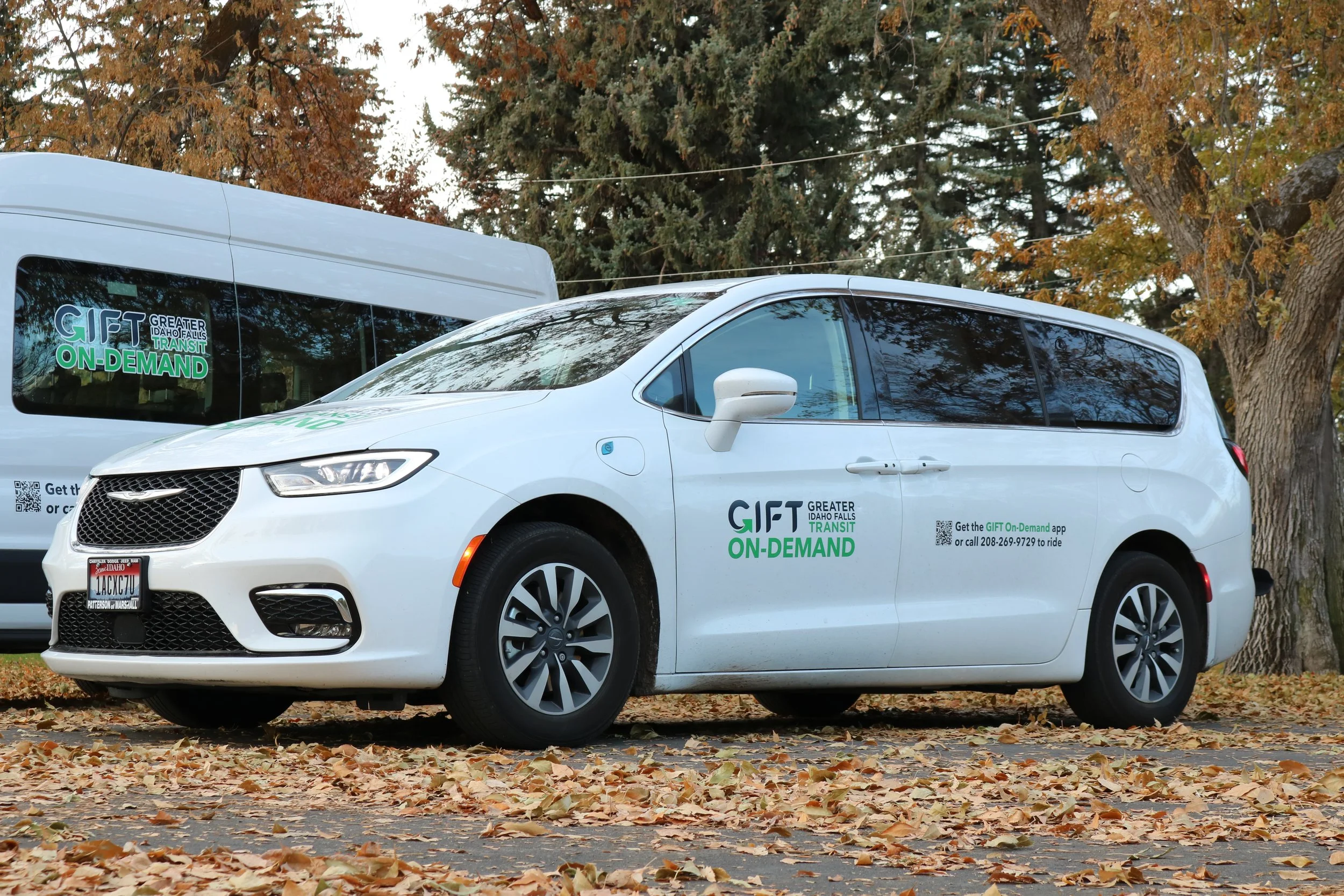
GIFT started deploying this rideshare program at a more affordable price than what other rideshare companies like Lyft were charging. Because they are not funded by the state, the City of Idaho Falls has to stay agile with their funding and how they spend it. Marquez saw another opportunity to lower fuel costs while also minimizing the program's carbon impact by electrifying some of their fleet. The City of Idaho Falls owns Idaho Falls Power, which has some of the cheapest electricity in the country making the decision to electrify a no-brainer. Since the start of this program, the fleet has evolved to 40% of the vehicles plug in hybrid or hybrid vans.
The Impact
310 days of operating
100,000 rides per year
340,000 miles annually
40% of fleet are plug-in hybrids
9 total vehicles
4 plug in electric hybrids (Chrysler Pacifica) 6 seats
3 hybrid vans (Toyota Sienna)
40,000 miles fully electric
41,000 kWh on 100% hydropower
Besides the operational, financial and environmental benefits of providing this rideshare program in place of the fixed route buses, Marquez has also seen an economic benefit rise up.
“Data shows from our survey that the average rider spends $50-$100 while using our service. This is money directly back into our community, not outsourced to delivery services or online shopping.”
Survey data also showed that the number one use of the service is for travel to and from medical appointments. Because of this, GIFT used opioid settlement funding to provide free rides to riders going to and from addiction treatments. Students are also utilizing this service - with a 600% increase in student ridership, this program is alleviating parking lot congestion for the College of Eastern Idaho.
What’s Next?
GIFT’s success with this program has them exploring if it can expand its service areas to Ammon and Bonneville County. This program has been replicated in Twin Falls, highlighting the success and demand for this form of public transportation for communities in Idaho. In addition to the roll out of the microtransit, GIFT is utilizing the Carbon Reduction Fund to finish building a pedestrian corridor and public transit improvements along a portion of Yellowstone Highway that serves the Haven Family Shelter.