
Jackson Hole Airport
Yellowstone-Teton Clean Cities has become a supportive partner of the Jackson Hole Airport as they incrementally electrify ground support equipment and reduce emissions by introducing Renewable Diesel into their fleet operations.
The Opportunity
As the only commercial airport situated in a national park, the airport remains committed to ecosystem stewardship in order to honor the unique location they’re in. This stewardship includes decarbonizing portions of their airport-owned ground support equipment, which has seen steady updates in the last five years but first started in 1991 with the purchase of the airport’s first Lektro (an electric tug for the planes).
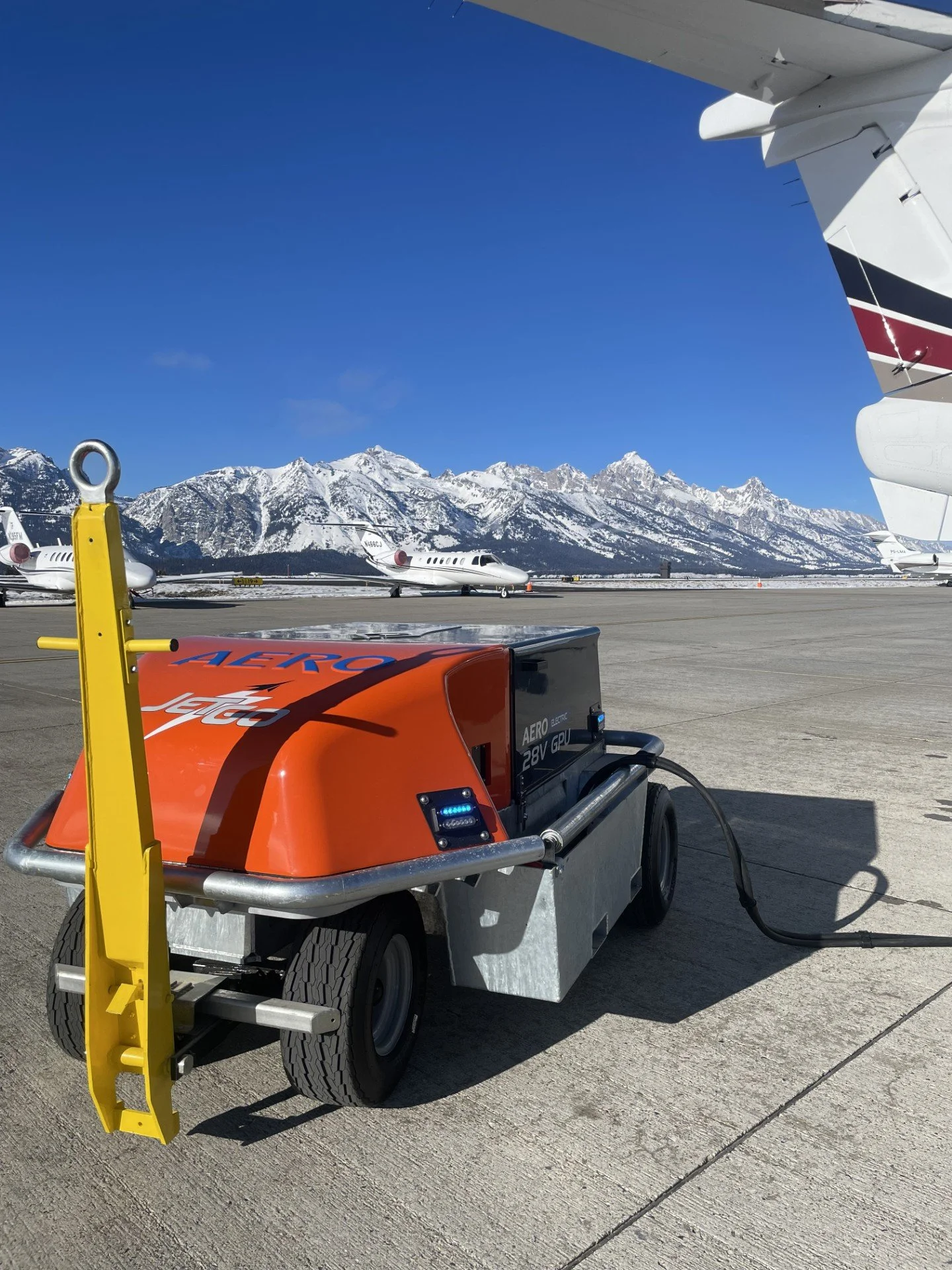
Fast forward to 2025, when the airport purchased one F-150 Lightning, two electric club cars and three eGPUs bringing the total number of electric vehicles to 17. So far their electric fleet includes: eight Lektros, three eGPUs, one pick-up truck and five electric club carts. For 2026, the airport will be receiving three more F-150 Lightnings to bring the number of electric vehicles up to 20.
The Solution
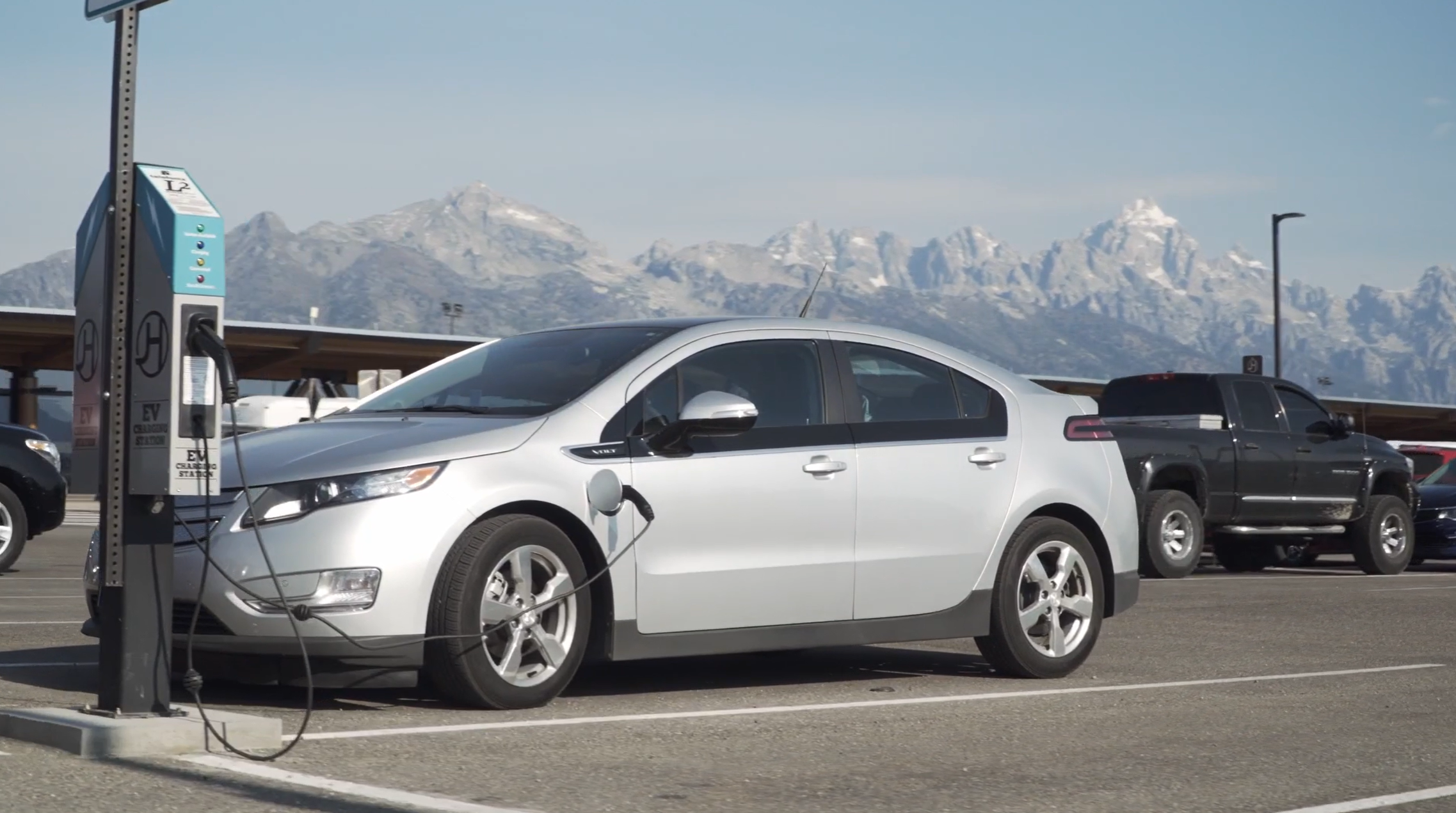
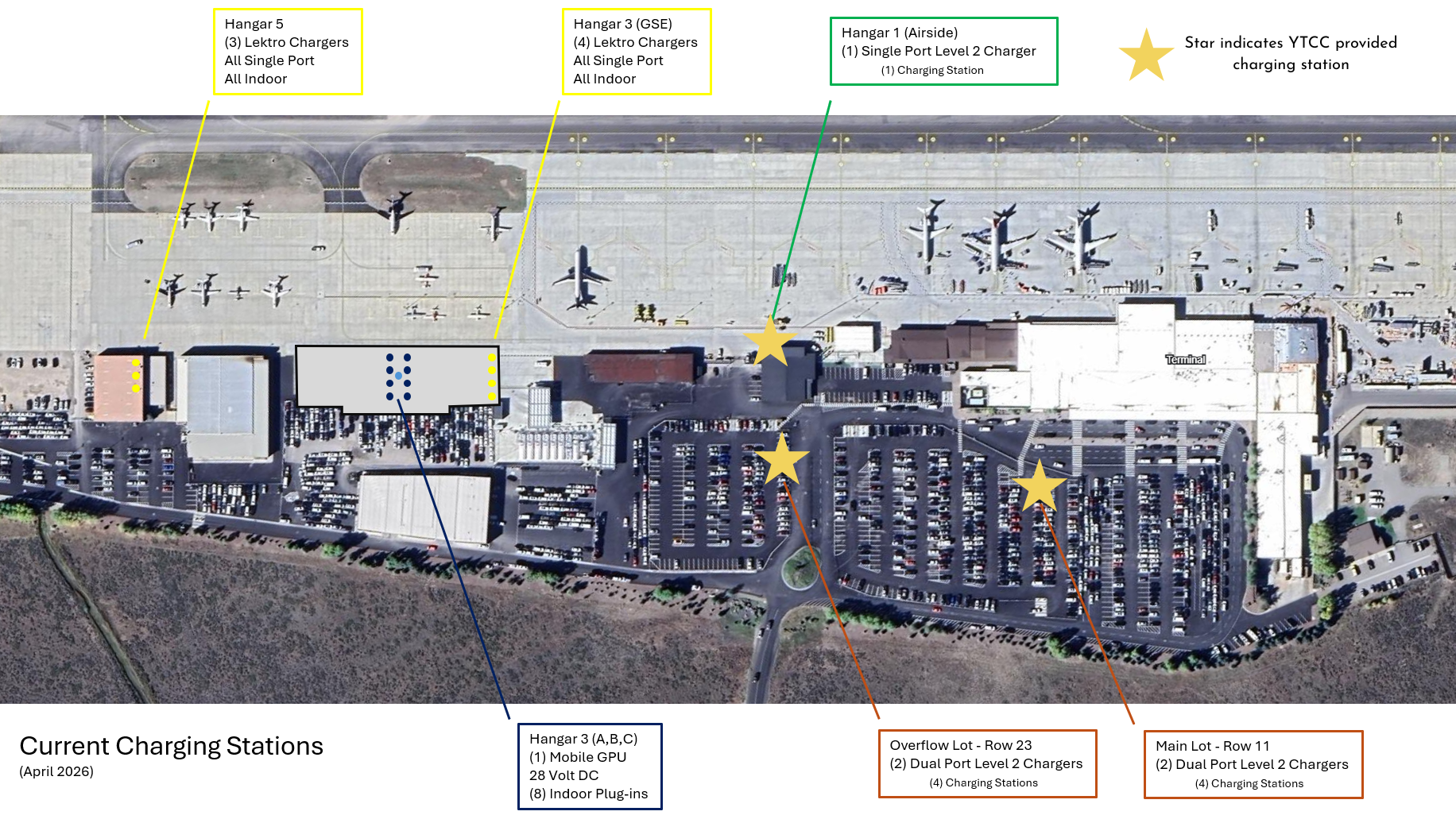
In addition to electrifying some of their fleet, the airport has been proactive in installing charging stations both airside and landside. There are four dual-port level two charging stations making eight charging stalls available in the public airport parking lots. These chargers are intended for those commuting to the airport in their personal EV, further encouraging EV adoption and participation. Airside, the airport has charging equipment appropriate for their specific needs. With the addition of the F-150 Lightning, the airport added a level two charger to power their truck. In 2026, another airside charger was added to accommodate the arrival of the three new electric pick ups.
In the summer of 2025, the Jackson Hole Airport also purchased a shipment of renewable diesel, dedicating the summer months as a trial period for the fuel. They used a 30% blend of R99 from May to November, with about 15.5% or 6,697 gallons of annual usage. After the trial run ended for the summer, the airport maintenance team reported positive experiences using the fuel. The airport plans to use a blend of renewable diesel again for the summer of 2026 and possibly extend into the winter as well.
The Impact
Due to the nature of airport ground support work, there is a lot of potential for GHG reduction. Most vehicles have high idle times, or need to be on in order to work. By electrifying what they can as soon as they can, the Jackson Hole Airport hopes to slash emissions from the ground support equipment.
The outcomes from this work include:
An elimination of 48.9 metric tons of greenhouse gas emissions in 2025 directly from their fleet.
A reduction of 5,500 GGE in fuel usage for the year.
Active participation in the surrounding community in ecosystem preservation, the airport is hoping to lead by example.
Expanding access to EV infrastructure by installing and offering level two charging stations in the public lots.
Continued trust in renewable diesel gives the airport the opportunity to sharply reduce emissions of ground support equipment without major retrofits or purchasing of expensive equipment.
What’s Next?
Jac Stelly, the airport’s Environmental Manager, has credited airport leadership with a willingness and energy to electrify when appropriate. The airport’s unique position within Grand Teton National Park comes with an inherent responsibility to also protect the ecosystem around it. While the electrification of certain heavy-duty vehicles needed such as snowplows and deicers is in early stages, the airport is open and interested in partnerships and demos to help encourage the technology along. Looking to 2026, the airport is excited to have three more electric pick-up trucks and continues to apply for and seek out funding to match their electrification goals.
